
Land clearing & forestry mulching
We Clear It.
Nothing
Leaves The Property.
One machine, one pass. Brush, briar, kudzu and trees up to 8 inches are cut and mulched where they stand, then spread across the ground as a cover. No burn piles, no dump trucks, no disposal bill.
Tell us about the land
Photos and rough acreage are usually all we need to quote.
We’ll only use this to answer your enquiry. No lists, no resale.
How it works
The Material Never Leaves The Ground
Traditional clearing is a convoy. An excavator pushes everything over, a dozer pushes it into piles, and then it is either burned or loaded into trucks and hauled off — and you pay for every stage.
Forestry mulching does it in one pass. A rotary head with carbide teeth grinds standing vegetation into chip where it stands, and spreads it back across the ground behind the machine.
What you are left with is a covered surface rather than bare, churned soil. That mulch layer holds the ground together through the first heavy rain, slows the regrowth underneath it, and breaks down into the soil over the following seasons.
- No haulingNothing is loaded and nothing goes to a landfill, so there is no disposal line on the quote.
- No burningNo piles, no permits, no waiting for a day the county allows it.
- Less erosionTopsoil stays where it is, under a mulch layer, instead of being stripped and left bare.
- SelectiveWe can work around the trees you want to keep rather than taking everything.
Side by side
Traditional Clearing vs Forestry Mulching
Both end up with cleared land. They get there very differently, and cost very differently.
| Traditional clearing | Forestry mulching | |
|---|---|---|
| Machines on site | Excavator, dozer, loader, dump trucks | One machine, one pass |
| What happens to material | Piled, burned or hauled to a landfill | Mulched where it stands, spread in place |
| Disposal cost | Hauling and tipping fees | None — nothing leaves the property |
| Burn permits | Often required | Not needed — nothing is burned |
| Ground disturbance | Soil stripped and compacted by tracks | Topsoil left largely intact |
| Erosion afterwards | Bare soil until something is seeded | Mulch layer holds soil and slows runoff |
| Steep or wet ground | Often inaccessible | Grades to 60° on tracks |
| Selectivity | Whole area cleared | Keep the trees you want, take the rest |
Scroll sideways on a phone
Worth knowing before you call
What Mulching Will Not Do
Most land clearing websites will not tell you this, and it is the thing that causes arguments later. So here it is plainly.
It does not remove stumps or roots. A mulching head grinds material at and above ground level. Stumps are cut low, and the root system stays in the ground. If you are putting a foundation, a septic field or a driveway on it, you will need grubbing or excavation afterwards — a different job, and often a different contractor.
Hardwoods will try to come back. Cutting a stem does not kill the root. Many species resprout the following season, and heavy vine growth like kudzu is particularly determined. A first clearing usually needs a follow-up cut in the next year or two, or a herbicide programme run by someone licensed for it.
There is a size limit. Our machines handle stems up to about 8 inches in diameter. Larger standing timber needs felling first, which we can advise on but do not do.
If any of that means we are the wrong contractor for your job, we would rather tell you on the phone than on the invoice.
“We’d rather lose the job than have the argument.”
How we quote- Need stumps out?You need grubbing or excavation, not mulching
- Building on it?Mulching first, then excavation for the pad
- Timber over 8 inches?Needs felling before we start
- Want it to stay clear?Plan a follow-up cut, or a licensed spray programme
What we clear
Ground That Has Got Away From You
Three to six years of growth is routine for us. Longer than that is usually still possible — send photos and we will tell you.
- Overgrown AcreageParcels left alone for years, brought back to usable
- Pasture ReclamationFields lost to brush, cedar and briar
- Fence Lines & BoundariesCleared so a line can actually be walked and maintained
- Trails & Access RoadsOpenings wide enough to drive, ride or walk
- Hunting LandShooting lanes, food plot edges, trail networks
- Kudzu & InvasivesHeavy vine growth cut back and mulched down
- Understory & Timber StandBrush removed while the mature trees stay
- Property PreparationLand made presentable before a sale or a survey
Our work
Drag Any Image To See The Difference
Every one of these was cut and mulched in place. Nothing was hauled away and nothing was burned.
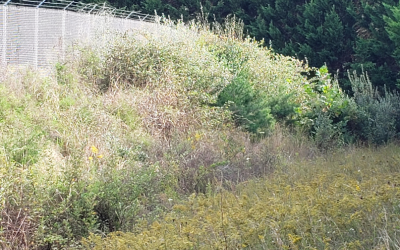

Heavy brush and saplings cleared
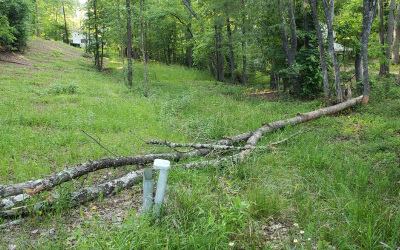
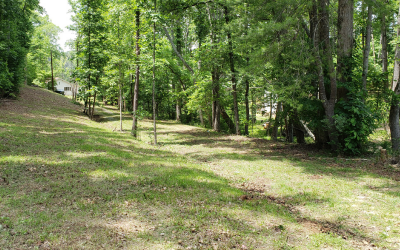
Years of growth removed in one visit
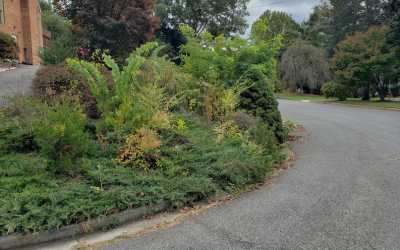
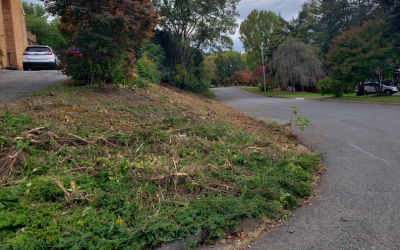
Steep ground brought back to mowable
The machines
Built To Mulch, Not Adapted To It
Our heaviest machines are Green Climber LV800s — 75 hp tracked mulchers with flail heads carrying carbide teeth, rated for three to six years of overgrowth and stems up to 8 inches.
They are remote controlled, so the operator stands clear of the head and the debris rather than sitting above it. And they work grades to 60°, which means a steep bank or a ravine bottom is not a reason to leave part of the property uncleared.
Before you ask
The Questions We Get Every Time
What does it cost?
It depends on four things, and anyone who quotes you a per-acre figure without asking about them is guessing: how dense the growth is, how big the stems are, how steep the ground is, and whether we can physically get equipment to it.
An acre of light brush and an acre of six-year growth with 8-inch stems are completely different jobs. Send photos and rough acreage and we will give you a real number rather than a range.
Do you take the stumps out?
No. Mulching cuts at and just above ground level and leaves the root system in place. If you need stumps gone — for a foundation, a septic field or a driveway — that is grubbing or excavation, and it happens after mulching rather than instead of it.
Will it grow back?
Some of it, yes. Cutting a stem does not kill the roots, so many hardwoods and vines resprout the following season. A first clearing on badly overgrown ground usually wants a follow-up cut within a year or two. After that, an annual or biennial cycle keeps it in hand.
If you want it permanently suppressed, that means a herbicide programme run by someone licensed to apply it, which is a different service to ours.
Do I need a permit?
Usually not for mulching on your own land, precisely because nothing is burned and nothing is hauled. But requirements vary by county, and land near water, in a floodplain or under a conservation easement can carry its own conditions. Check with your county before work starts — we will tell you if something looks like it needs asking about.
How thick is the mulch left behind?
It depends entirely on how much material was standing there. Light brush leaves a thin scatter; six years of growth leaves a substantial layer. On most jobs the mulch is a benefit — it holds the soil and suppresses regrowth — but if you plan to seed pasture immediately, tell us and we will talk about how heavy to leave it.
Can you work in winter?
Often better than in summer. With leaves down there is more visibility, less material to process, and frozen or firm ground carries the machine well. Winter is a good time to book work that has been put off.
What if the ground is steep or wet?
Steep is what we are built for — our machines are rated to 60° on tracks rather than wheels. Wet is more nuanced: tracks spread load far better than tyres, but genuinely saturated ground is worth waiting out rather than rutting. We will be straight with you about which one you have.
Get a quote
Send Us The Parcel You’ve Been Avoiding
Photos and rough acreage are enough to start. We’ll tell you what it takes, what it costs, and whether mulching is actually the right answer for what you want to do with the land.
- Step 01Send photos
A few shots of the thickest part, plus an address and rough acreage.
- Step 02We assess it
Density, stem size, grade and access — the four things that set the price.
- Step 03You get a number
A straight quote, and an honest answer if you need a different service.